

If you plan to work in Australia’s construction industry, you’ll need a White Card before stepping onto any site. It’s not just a formality — it’s a legal requirement that ensures everyone understands construction safety standards. Whether you’re a labourer, site supervisor, or contractor, completing a White Card course in NSW is your first step toward a safe and legal start in construction.
What Is a White Card?
A White Card, officially known as a General Construction Induction Card, is required for anyone involved in construction work across Australia. It confirms that you’ve completed safety training and understand how to identify and control hazards on-site.
You’ll need a White Card if you are:
- A site manager or supervisor
- A surveyor, labourer, or tradesperson
- A contractor or subcontractor
- A person who enters operational construction zones regularly
Essentially, if your role involves entering or working in construction areas, you must hold a White Card.
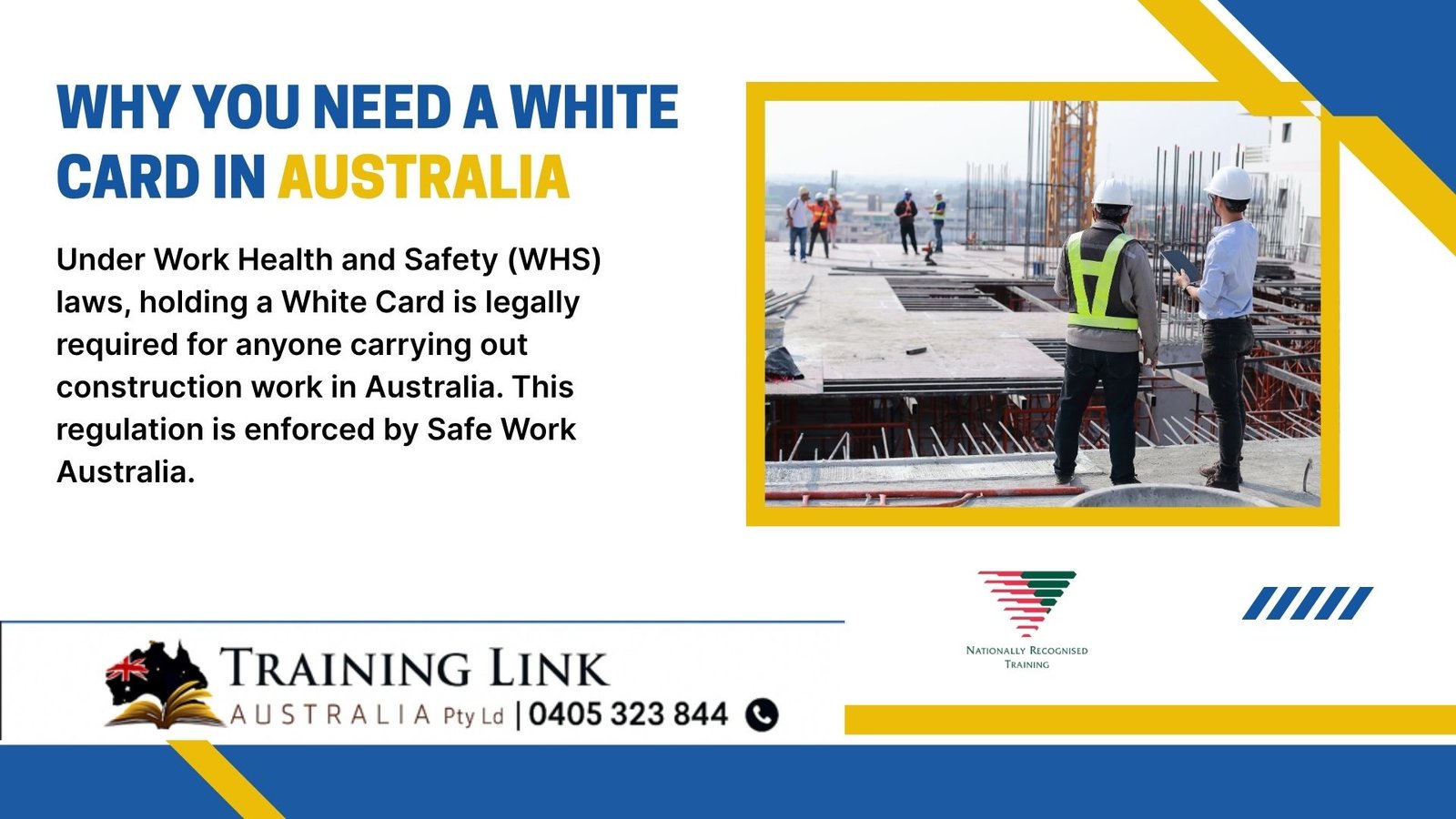
Why You Need a White Card in Australia
Under Work Health and Safety (WHS) laws, holding a White Card is legally required for anyone carrying out construction work in Australia. This regulation is enforced by Safe Work Australia.
The purpose of the White Card is to ensure that all workers understand essential safety principles, including hazard awareness, risk management, and emergency procedures. Without it, you cannot legally work on any construction site nationwide.
Eligibility Requirements
Before enrolling in a White Card course, you must meet a few basic eligibility requirements:
- Provide 100 points of identification
- Have a Unique Student Identifier (USI) number
- Meet minimum language, literacy, and numeracy (LLND) standards
These requirements ensure that learners can fully understand safety protocols and training materials.
The course is delivered by qualified trainers who hold current training and assessment credentials (such as TAE40122 or equivalent) and have recent experience in construction safety.
Holding a White Card is essential for most construction jobs in Australia. It can also boost your eligibility for entry-level roles in the construction industry.
Choosing the Right Training Organisation
To ensure your White Card is valid, always enrol with a Registered Training Organisation (RTO) that delivers the nationally accredited unit:
CPCWHS1001 – Prepare to Work Safely in the Construction Industry.
This course is approved by both the Australian Skills Quality Authority (ASQA) and Safe Work Australia.
White Card training is available in-person and online in some states. However, online delivery is not accepted in Western Australia, South Australia, or the Northern Territory due to local regulations.
Before enrolling, always check your state or territory’s specific requirements to make sure your training is recognised.
What to Expect During the White Card Course
The White Card course teaches you how to identify safety risks and take action to prevent workplace accidents. It’s a short but practical course that covers essential construction safety principles, including:
- Understanding workplace health and safety laws
- Identifying common construction hazards
- Following safety signs and instructions
- Using personal protective equipment (PPE) correctly
- Responding to incidents and emergencies
At the end of the course, you’ll complete an assessment that may include multiple-choice questions, short verbal responses, and simulated practical activities. Trainers will guide and support you throughout the process to help you demonstrate your understanding of safe work practices.
Once you successfully complete the training, you’ll receive a Statement of Training. This temporary certificate allows you to start work immediately and remains valid for 60 days while you wait for your physical White Card to arrive (usually within 30 days).
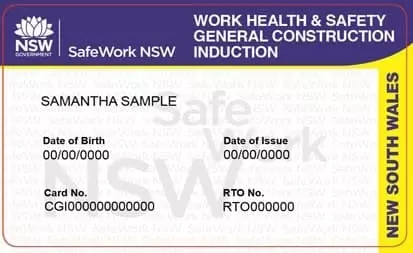
How to Find or Verify Your White Card Online
If you’ve already completed your training and want to check your card’s status, use Verify.licence, the official SafeWork NSW verification tool.
This online service allows you to find your White Card or confirm its validity, ensuring that your credentials are active and legitimate.
When Does a White Card Expire?
A White Card does not technically expire, but it becomes void if you haven’t carried out construction work for two consecutive years.
If that happens, you’ll need to retake the course to reactivate your eligibility and refresh your safety knowledge.
Interstate White Cards
Construction workers can use their White Cards from other states or territories to work in NSW. The cards are recognised nationally under mutual agreements between state authorities.
To confirm if your card is valid, you can refer to SafeWork NSW’s Interstate Card Fact Sheet.
Replacing a Lost or Damaged White Card
If your White Card is lost or damaged, contact the RTO that issued it. They will verify your details and help you apply for a replacement. If you can’t remember your training provider, use Verify.licence to find your record online.
People Also Ask
1. What is the purpose of a White Card in Australia?
It confirms that you’ve completed approved safety training and understand how to work safely in construction.
2. Is it worth getting a White Card?
Absolutely. Without it, you can’t legally work on construction sites in Australia.
3. Do I need a White Card to work in Australia?
Yes. Anyone carrying out construction work or entering a construction zone must hold a valid White Card.
4. What happens if you don’t have a White Card?
You’re not permitted to work on construction sites, and employers may face penalties for hiring unqualified workers.
Final Thoughts
The White Card course is your foundation for a safe and successful career in construction. It’s more than a legal requirement — it’s a commitment to safety, professionalism, and responsibility.
By training with an accredited RTO, following WHS laws, and maintaining your qualifications, you’ll ensure that you’re always ready to work safely and confidently on any site in Australia.
If you’re ready to begin, find a SafeWork NSW–approved White Card trainer today and take your first step toward a safer future in construction.